

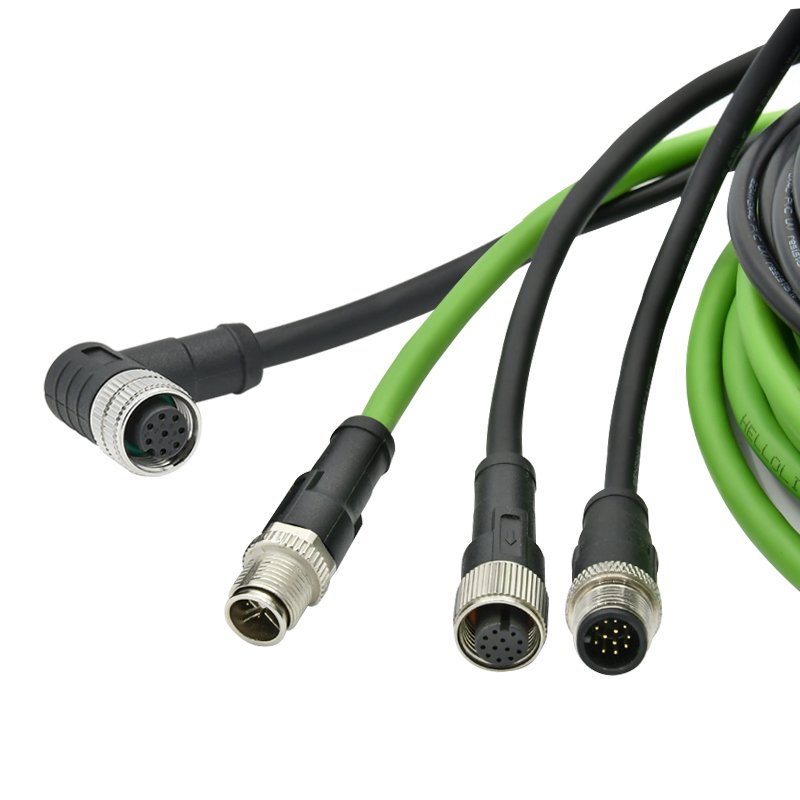
Introduction: Why M-Series Connector Coding Matters
M series connectors—such as M8, M12, M16, and M23 connectors—are widely used in industrial automation, sensors, actuators, fieldbus systems, and Ethernet communication.
One of the most critical but often misunderstood aspects of these connectors is coding.
Connector coding defines the mechanical keying and pin arrangement, ensuring that only compatible plugs and sockets can mate.
Correct coding prevents misconnection, signal interference, equipment damage, and system downtime.
This article provides a complete explanation of M series connector coding rules, covering all major coding types, applications, and selection tips.
What Is Connector Coding?
Connector coding refers to the keyway position and internal pin configuration that mechanically prevents incorrect mating.
Coding ensures:
- Signal integrity
- Electrical safety
- Protocol compatibility
- Error-free installation
Each coding type is designed for a specific signal, voltage, or data protocol.
Why Correct Coding Selection Is Critical
Incorrect coding selection can lead to:
- Incompatible connections
- Signal interference
- Electrical short circuits
- Permanent equipment damage
Coding ensures mechanical mismatch protection, especially in complex industrial systems.
How to Choose the Right M-Series Connector Coding
When selecting M-series connectors, consider:
- Signal type: Analog, digital, Ethernet, power
- Voltage & current requirements
- Communication protocol
- Environmental conditions
- Standard compliance (IEC 61076)
Matching coding to application guarantees safety and performance.


